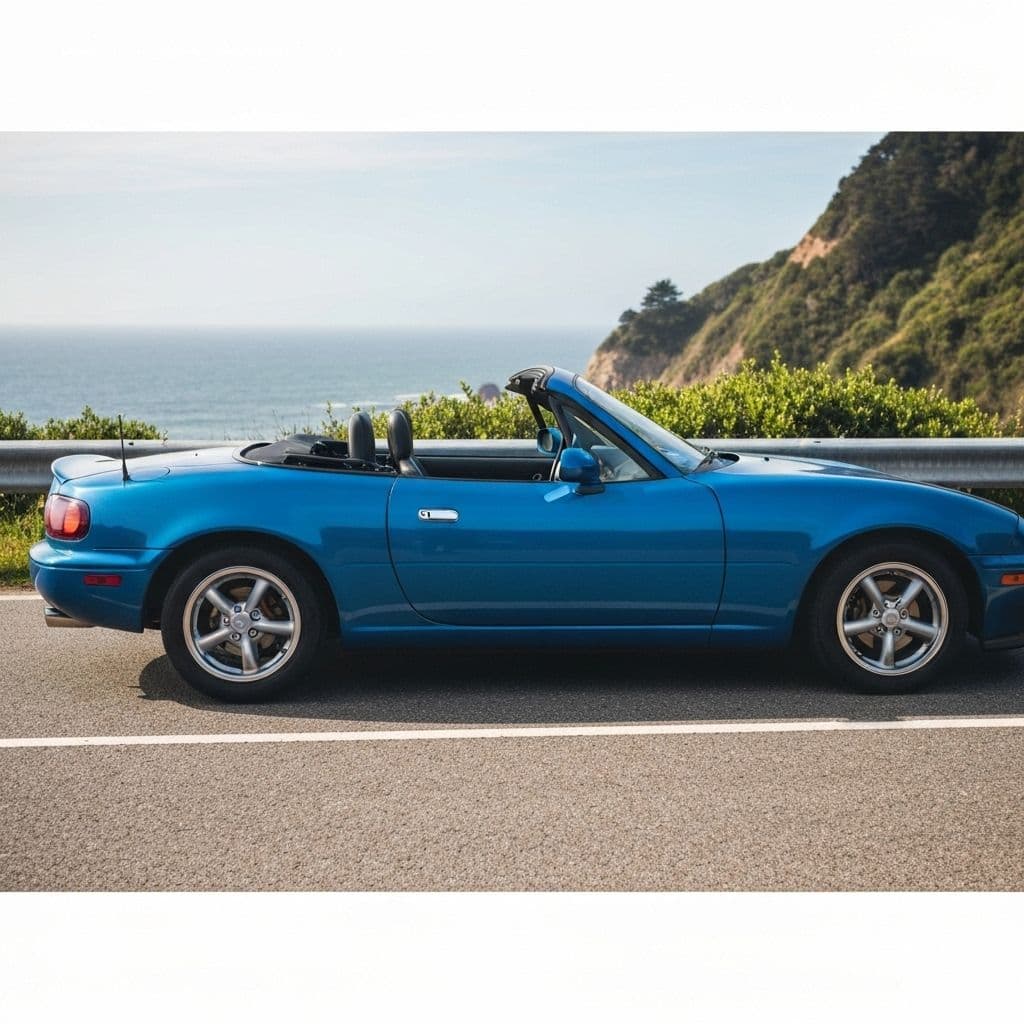
"Used Japanese car export" describes two completely different businesses sharing the same supply chain. On one end you have the JDM enthusiast trade — Skyline GT-Rs, Supra MK4s, RX-7s, NSX Type-R — vehicles selling at six-figure prices to passionate global buyers. On the other end you have the volume trade — Probox vans, Allion sedans, Hiace minibuses, Honda Fits — moving 50 to 100+ vehicles per month into emerging markets at thin per-unit margins. Both businesses use the same auctions, the same shipping lines, and often the same exporters. But the strategy, the risks, and the customer profiles couldn't be more different. This guide is for B2B operators choosing which side of the trade to focus on.
The two businesses defined#
JDM enthusiast imports#
JDM (Japanese Domestic Market) refers to vehicles that were originally sold only in Japan, often with specifications, trims, or models unavailable elsewhere. The "JDM Legend" subset refers to a specific list of performance and collector cars that have become globally iconic:
- Nissan Skyline GT-R (R32, R33, R34)
- Toyota Supra MK4 (A80, JZA80)
- Honda NSX (NA1, NA2, especially Type-R)
- Mazda RX-7 FD3S
- Subaru Impreza WRX STI (multiple generations)
- Mitsubishi Lancer Evolution (I through X)
- Honda Civic Type-R (EK9, FD2, FK8)
- Nissan Silvia (S13, S14, S15)
- Mazda RX-8
- Nissan 240SX, 350Z, 370Z
These vehicles attract enthusiast and collector buyers. Pricing is set by global condition rarity and specific trim/spec, not by transportation utility.
Mass-market / volume imports#
Volume imports are the cars Japanese exporters move in numbers — sedans, vans, compacts, work vehicles. Toyota dominates this segment (Probox, Allion, Premio, Vitz, Hiace, Hilux, Land Cruiser, Fielder, Aqua, Prius). Honda (Fit, Stepwgn, N-Box), Nissan (AD, Note, March), Mazda (Demio, Premacy), Subaru (Forester, Impreza), and Mitsubishi (Outlander, Delica D5) round out the volume market.
These vehicles attract end-user buyers in emerging markets. Pricing is set by transportation utility, fuel economy, parts availability, and total cost of ownership.
Margin and pricing dynamics#
The two markets price very differently:
| Aspect | JDM enthusiast | Mass-market volume |
|---|---|---|
| Typical FOB | USD 20,000–150,000+ | USD 3,000–25,000 |
| Margin per unit | USD 1,000–5,000+ | USD 200–600 |
| Margin % | 5–10% | 5–8% |
| Volume / month (mature exporter) | 1–10 | 30–150+ |
| Buyer payment terms | T/T deposit + balance | T/T full pre-shipment |
| Auction yards | USS, JU specialty + dealer trade | All major auction houses |
| Inspection cost | Higher (worth it for value) | Standard |
JDM enthusiast trade has higher per-unit margin but lower volume. Mass-market is the inverse. The combined revenue can land at similar levels for similar headcount, but the cash flow, customer service overhead, and risk profile differ dramatically.
Customer profiles#
JDM buyers#
- Global, predominantly North America (after 25-year exemption), UK, Australia, Russia (Far East), UAE
- High individual cars-per-decade rate but each transaction is large and personal
- Sophisticated buyers — they know auction sheets, they know matching numbers, they know specific trim differences
- High service expectations, but tolerant of long lead times when sourcing the right vehicle
- Refer other buyers via enthusiast networks (forums, clubs, Instagram, YouTube)
Mass-market buyers#
- Concentrated in importing markets — Kenya, Tanzania, Pakistan, Bangladesh, Russia, UAE, etc.
- Some are end users; many are local resellers / second-tier dealers
- Less sophisticated on technical inspection; more sensitive to landed cost and delivery speed
- Repeat-buyer business is significant — a happy local dealer orders monthly
- Fraud risk is asymmetric — buyer-side scams (chargebacks, identity issues) are part of the landscape
Risk profiles#
JDM risks#
- Authenticity — fake Type-R badges, swapped engines, replica chassis numbers. A wrong call can cost USD 30,000+ in resale value.
- Modification disclosure — non-stock parts can fail destination compliance (US RHD over-25 import, UK MoT, etc.)
- Single-unit concentration — losing one vehicle in transit is a real percentage of monthly revenue
- Specialist knowledge required — generic auction-sheet reading is not enough for high-end JDM
- Buyer expectation gaps — meticulously photographed vehicles set high delivery standards
Mass-market risks#
- Volume concentration — one missed vessel sailing means dozens of vehicles delayed simultaneously
- Currency risk — emerging-market customers paying in local currency face FX moves; if your settlement is USD, you may eat the difference to keep the customer
- Buyer-side fraud — chargebacks, "vehicle never arrived" claims, identity disputes are part of the volume game
- Compliance shifts — destination countries change duty rules; an in-flight shipment can land into a 30% higher tax bill
Inspection economics#
For JDM enthusiast cars, inspection cost (USD 200–400) is irrelevant relative to vehicle value. Always inspect, ideally with a JDM-specialist inspector who can validate originality.
For mass-market cars, the same USD 200 represents 2–4% of the vehicle FOB. It still pays — destination compliance often requires it, and the report protects the exporter contractually. But the calculation of what to inspect is different.
Strategy choices#
Pure JDM specialist#
- Lower volume, higher per-unit margin
- Build personal-brand reputation in enthusiast forums (Speedhunters, Bring a Trailer, JDM forums, dedicated Instagrams)
- Specialist sourcing knowledge required
- Best for operators with car-enthusiast background, photography skills, longer-form content marketing capability
- Capital efficient — 5 cars in inventory at USD 50K each is USD 250K rolling
Pure mass-market volume#
- Higher volume, thinner margin per unit
- Build relationships with destination resellers / dealers
- Logistics excellence is the moat
- Best for operators with strong destination-market language skills and shipping operations
- Capital intensive — 30 cars rolling means USD 300K+ working capital
Hybrid: volume + JDM showcase (the AUTO-X / common approach)#
- Use JDM legends as the brand-defining showcase that builds attention and search traffic
- Use volume mass-market as the cash engine
- Cross-sell where possible (a Kenyan dealer who also has high-end customers may take both)
- This is the dominant model among medium-sized exporters
Which markets favor which#
| Market | JDM | Mass-market |
|---|---|---|
| Kenya | Low (premium tax) | High |
| Tanzania | Low | High |
| Russia (Far East) | High | High |
| UAE | Medium-high | Medium |
| Pakistan | Low | High |
| New Zealand | Medium-high | Medium |
| UK | High | Low (LHD/RHD compatible) |
| Caribbean | Medium | High |
| Mongolia | Low | High |
| US (over 25 years) | High | None |
JDM enthusiast trade lives in markets with disposable income for collector cars and either RHD acceptance or 25-year-old import exemptions. Mass-market lives in emerging-economy daily-driver demand.
Bottom line#
If you have car-enthusiast knowledge and want a smaller operation with higher margin per unit, JDM specialist is a legitimate single-focus business. If you want scale and have the logistics + customer-service capacity, mass-market volume is the bigger long-term opportunity. Most successful operators we know run a hybrid: JDM as marketing and brand, volume as revenue.
To explore what we currently have in stock, see our inventory, filter by brand, or request a sourced vehicle by spec.