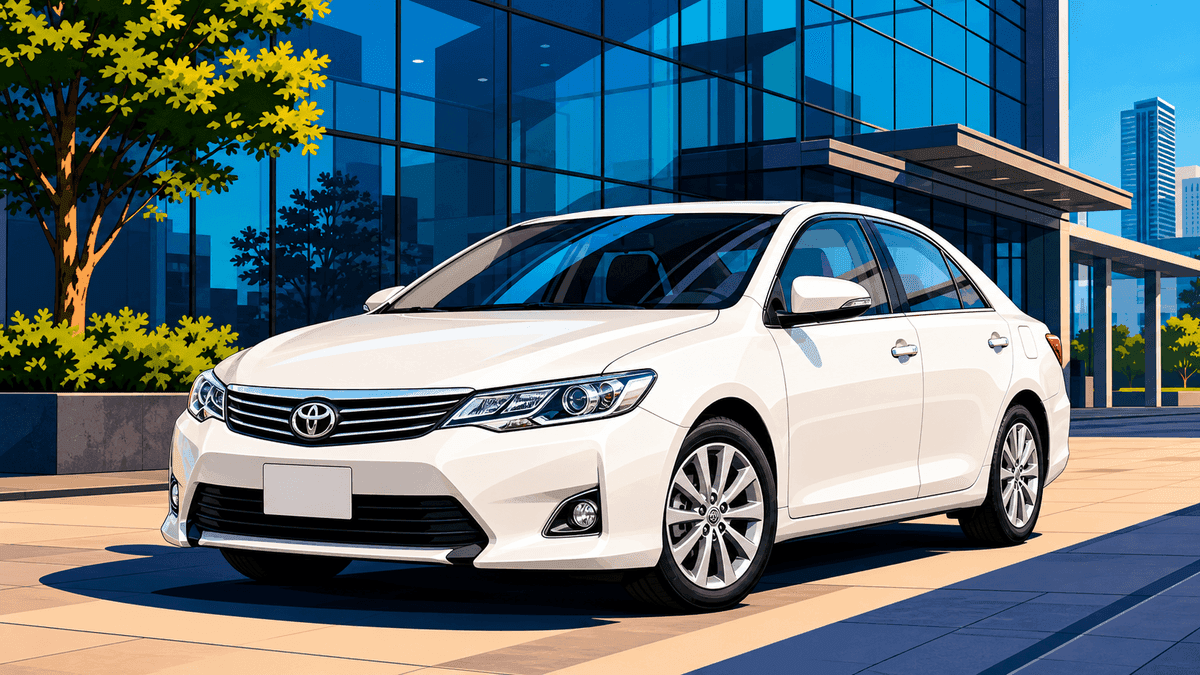
If you import used Japanese sedans for resale, the Toyota Premio and its twin, the Toyota Allion, are two of the safest bets in the market. These premium compact sedans sit just above the Corolla, combining low running costs with a roomy, quiet cabin that buyers in Africa and South Asia associate with status. This guide walks a B2B importer through the generations, engines, the real differences between the two nameplates, what to inspect before you buy, and where prices land today.
Premio and Allion: the same car, two badges#
Toyota builds the Premio and Allion on the same platform, in the same factory, with the same wheelbase and mechanicals. They are the successors to the legendary Corona (Premio) and Carina (Allion). Think of them as fraternal twins: identical bones, different suits. Dealers stock both because a buyer who wants "a Premio" will often accept an Allion at the right price — and vice versa.
The nameplates matter for resale, though. In many African and South Asian markets the Premio carries a slightly more conservative, executive image, while the Allion reads as a touch sportier and younger. Neither is "better"; they simply appeal to different end-buyers.
Generations: T240 vs T260#
Two generations dominate the export market today.
- T240 (2001–2007) — the first Premio/Allion. Available with the 1.5L (1NZ-FE), 1.8L (1ZZ-FE) and 2.0L (1AZ-FSE) engines. Simple, tough, cheap to run. Still hugely popular as a budget executive taxi.
- T260 (2007–2021) — the long-lived second generation, facelifted several times. Cleaner styling, better NVH, Valvematic 1.8L (2ZR-FAE) from ~2010, CVT on most trims. This is the sweet spot for importers today: modern enough to command a premium, old enough to be affordable.
For most markets the late T260 (2016–2021 facelift) offers the best balance of price, features and buyer appeal.
Engines and fuel economy#
| Engine | Displacement | Code | Real-world economy | Notes |
|---|---|---|---|---|
| 1.5L | 1,496 cc | 1NZ-FE | 14–17 km/L | Cheapest to run; adequate for city taxi use |
| 1.8L | 1,797 cc | 2ZR-FAE (Valvematic) | 13–16 km/L | The all-rounder; best resale |
| 2.0L | 1,986 cc | 3ZR-FAE / 1AZ-FSE | 11–14 km/L | Rare; picked for highway comfort |
The 1.8L is the volume seller and the easiest to resell. The 1.5L wins where fuel is expensive and duty is calculated on engine size. The 2.0L is a niche choice for buyers who prioritise cruising refinement.
Why they sell in Africa, Sri Lanka and Bangladesh#
- Executive taxi duty: The quiet cabin, soft ride and clean styling make the Premio/Allion a default choice for airport and corporate taxi fleets in Kenya, Tanzania, Uganda and beyond.
- Toyota parts network: Filters, brakes, suspension and NZ/ZR engine parts are available in every market — cheap and everywhere.
- Fuel economy meets space: Full-size adult rear legroom with compact-car fuel bills.
- Duty-friendly engines: In markets that tax by engine capacity (Sri Lanka, Bangladesh), the 1.5L keeps landed cost low.
- Strong residuals: Buyers trust the badge, so units hold value and turn over quickly on your lot.
Premio vs Allion: the differences that matter#
| Feature | Premio | Allion |
|---|---|---|
| Positioning | Conservative / executive | Younger / slightly sporty |
| Front styling | Chrome-forward, formal grille | Cleaner, more modern face |
| Typical buyer | Taxi fleets, older private buyers | Private buyers, younger drivers |
| Resale image | Marginally stronger in E. Africa | Strong in South Asia |
| Mechanicals | Identical | Identical |
| Trim names | F, X, G "EX Package" | A15, A18, A20, G Plus |
The practical takeaway: buy on condition and price, not on badge. If two cars are equal, let your local demand decide which nameplate moves faster.
What to check before you buy#
- CVT health (T260): warm the car, look for shudder or slipping under light acceleration; check for a service history on the CVT fluid.
- Valvematic (2ZR-FAE): listen for a ticking actuator; a known wear point on neglected units.
- Rust: inspect rear wheel arches, sills and the boot floor — snow-belt cars from northern Japan can hide corrosion.
- Auction sheet grade: aim for grade 4 or above; check R/A marks for repaired panels.
- Interior wear: ex-taxi units show driver-seat bolster and pedal wear — price accordingly.
- Odometer & records: cross-check the auction sheet mileage against service stickers.
Always route your candidates through a pre-export inspection so surprises surface in Japan, not at your port.
Typical export price ranges#
Indicative FOB Japan figures for clean, auction-grade-4 units (they move with the market):
- T240, 1.5/1.8L (2003–2007): roughly USD 1,800–3,500
- Early T260 (2008–2013): roughly USD 3,000–5,500
- Late T260 facelift (2016–2021): roughly USD 6,000–11,000+
Low-mileage, high-grade late cars sit at the top of these bands; ex-fleet high-mileage units at the bottom.
The bottom line#
The Premio and Allion remain among the most reliable, resale-friendly sedans an importer can stock. Choose the T260 for margin and appeal, favour the 1.8L for balance and the 1.5L for duty-sensitive markets, and buy on condition rather than badge.
Ready to source? Browse used Toyota Premio and browse used Toyota Allion, then request a quote and we'll handle inspection, freight and documentation.