Planning to import a Japanese used car to Uganda? You are in good company. Uganda is one of East Africa's most active markets for used Japanese vehicles, and buying auction-direct from Japan often lands you a cleaner, lower-mileage car than the local yard — at a better price. Because Uganda is landlocked, your vehicle ships to the port of Mombasa in Kenya, then travels overland by road or rail to Kampala. This guide walks through the full journey: shipping route, Uganda Revenue Authority (URA) taxes, age limits, right-hand-drive rules, the models Ugandan buyers love, and a realistic cost and timeline breakdown.
Why buy direct from Japan#
Japan's domestic fleet is famously well maintained, and its auction system grades every car on a transparent scale. For a Ugandan importer, buying direct means:
- Lower landed cost than buying from a local dealer who has already added margin.
- Wider choice — Japanese auctions list tens of thousands of units weekly.
- Verified condition through auction sheets and a pre-export inspection.
- Popular right-hand-drive layout, which matches Uganda's left-hand traffic.
Shipping route: Japan → Mombasa → Kampala#
Uganda has no coastline, so every imported car arrives through Kenya. The standard route is:
- Japan port (Yokohama, Nagoya, Osaka) → Mombasa by RoRo (roll-on/roll-off) vessel, or container if you prefer.
- Mombasa customs and transit bond — the car moves under a Kenyan transit bond so Kenyan duty is not charged; taxes are paid in Uganda.
- Mombasa → Kampala overland, roughly 1,150 km, by car carrier truck or the SGR/MGR rail service to the inland container depot.
Sea transit from Japan to Mombasa is usually 25–35 days. See our dedicated shipping to Mombasa page for vessel schedules and freight ranges. If you are also comparing the coastal market, our import to Kenya guide covers Kenya-specific rules.
Uganda age limits and the environmental levy#
Uganda does not ban older cars outright, but it penalises them through an environmental levy that escalates with vehicle age. As a rule of thumb:
- Vehicles 8 years old and below — no environmental levy.
- Vehicles older than 8 years — an environmental levy applies, calculated as a percentage of CIF value, and the rate rises the older the vehicle is.
Because the levy compounds with the other taxes below, most buyers target vehicles under 8 years old to keep the total landed cost sane. Always confirm the current levy bands with URA before you commit, as government budgets adjust these rates.
URA taxes and duties#
The Uganda Revenue Authority calculates taxes on the CIF value (Cost + Insurance + Freight to Mombasa) plus a URA-assessed depreciated value. The main components for a typical passenger car are:
| Tax / duty | Typical basis | Indicative rate |
|---|---|---|
| Import duty | CIF value | 25% |
| Value Added Tax (VAT) | CIF + duty | 18% |
| Environmental levy | CIF value (age-based) | 0% (≤8 yrs) to higher for older |
| Withholding tax | CIF value | 6% |
| Registration & plates | Flat / engine-size band | Fixed fee |
These stack, so the effective tax on an older, large-engine car can approach or exceed the car's own value. Engine capacity also matters — bigger engines pull higher registration bands. Treat the figures above as indicative and verify the live rates with URA or your clearing agent before purchase.
Right-hand-drive and roadworthiness#
Uganda drives on the left, so right-hand-drive (RHD) Japanese cars are exactly right — no conversion needed. That is a major reason Japanese imports dominate the market. On arrival, the vehicle is inspected for roadworthiness before registration. A clean pre-export inspection in Japan smooths this step and reduces surprises at the Kampala end.
Popular models in Uganda#
Ugandan buyers prioritise fuel economy, ground clearance for rougher roads, spare-part availability, and resale value. The perennial favourites:
- Toyota Probox — the ultimate workhorse: cheap to run, endlessly repairable, holds value. See our Toyota Probox guide.
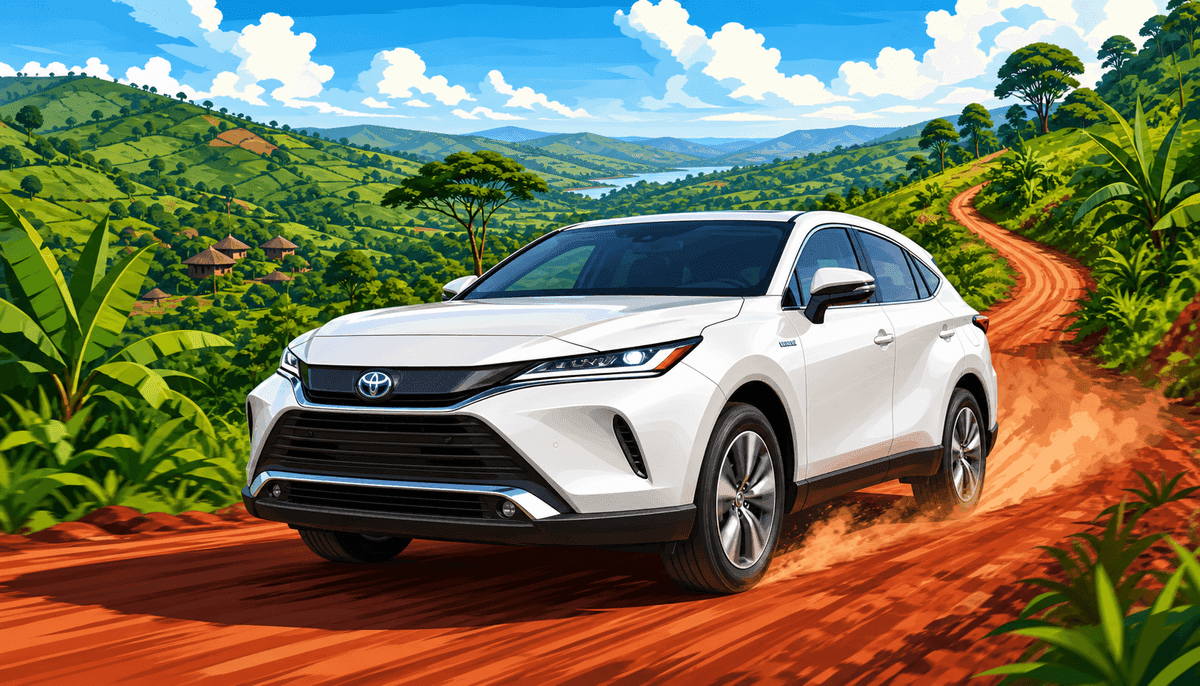
- Toyota Harrier — premium SUV comfort with strong resale demand.
- Toyota Premio — a comfortable, economical sedan for family and taxi use.
- Toyota Noah / Voxy — 7–8 seat people-movers for family and matatu operators.
Toyota dominates because spare parts and mechanics are everywhere in Uganda, but Nissan (Wingroad, X-Trail) and Subaru (Forester) also sell well.
Timeline: from purchase to plates#
| Stage | Typical duration |
|---|---|
| Auction bid / purchase | 1–3 days |
| Inland transport + vessel booking in Japan | 1–2 weeks |
| Sea transit (Japan → Mombasa) | 25–35 days |
| Mombasa clearing + transit bond | 3–7 days |
| Mombasa → Kampala (road/rail) | 3–7 days |
| URA clearance, tax, inspection, registration | 5–10 days |
Total: roughly 7–10 weeks from winning the car to driving on Ugandan plates, depending on vessel schedules and how quickly duties are settled.
Estimating your total landed cost#
Your all-in Kampala cost is built from these layers:
- FOB price — the car at the Japanese port.
- Freight + insurance to Mombasa (this makes the CIF value).
- URA taxes — duty, VAT, withholding, and environmental levy if applicable.
- Kenya transit + Mombasa–Kampala transport.
- Registration, plates, and clearing-agent fees.
A useful planning habit: get the CIF figure first, then apply the URA percentages, then add transport and agent fees. For a firm, itemised quote on a specific model to Kampala, request a quote and we will return a full CIF-plus-taxes breakdown.
Final checklist before you buy#
- Confirm the vehicle is 8 years old or younger to avoid the environmental levy (or budget for it if older).
- Get the auction sheet and a pre-export inspection.
- Confirm RHD (all our Japanese stock is RHD).
- Ask your agent for the current URA tax bands in writing.
- Budget for Mombasa–Kampala inland transport, not just sea freight.
Buying an imported Japanese car for Uganda is straightforward once you understand the Mombasa route and the URA tax structure. Pick a sub-8-year model, verify the condition, and factor the full landed cost — then request a quote to get moving.