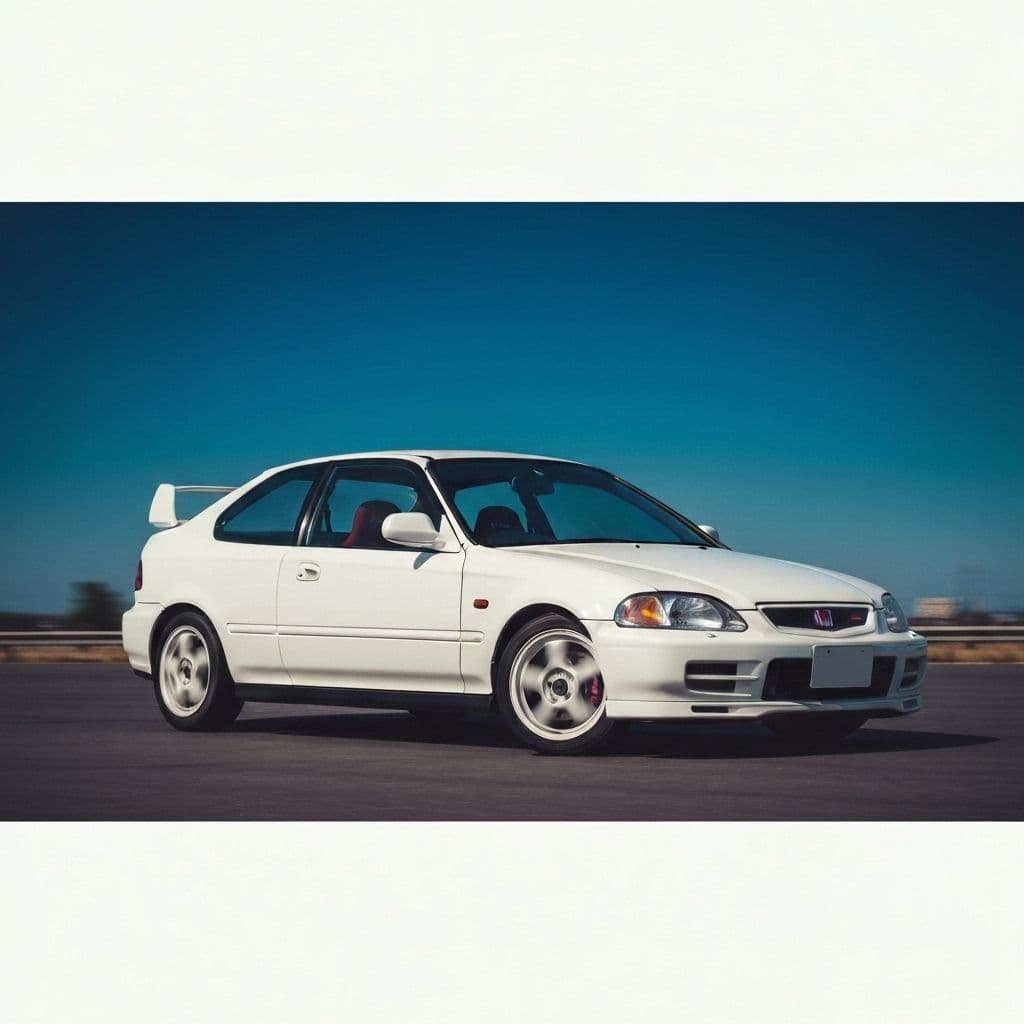
Importing your first used Japanese vehicle is an information-asymmetric trade. The Japanese exporter has access to auction data, inspector networks, shipping rates, and market history that you don't. The destination clearing agent has tax-rule knowledge you don't. The customer-side scammer (yes, they exist on both sides) has a playbook they've run hundreds of times. As a first-time buyer, your job isn't to match their expertise — it's to follow a defensive checklist that prevents the typical USD 1,000–10,000 first-timer mistakes.
This guide is the checklist.
1. Set a realistic landed budget, not just an FOB budget#
The auction-won price (FOB) is roughly 50–70% of your final landed cost in most destinations. Pakistan can land at 200% of FOB. Russia can land at 250%+. Kenya is 150–180%. Set your budget in landed terms before shopping, not FOB terms.
Action: Pick your destination port. Estimate landed cost from the destination breakdown in our CIF cost article. Set your budget to that landed total. Work backward to find the FOB ceiling.
2. Define your spec tightly#
A vague brief like "any clean Toyota under $10,000" generates weeks of back-and-forth and missed auctions. A precise brief like "2018 Toyota Allion 1.5 G CVT, white or silver, mileage under 80,000 km, no accident history, FOB target ¥850,000 maximum" lets a sourcing exporter execute.
Action: Write your spec down before contacting any exporter. Include make, model, year range, mileage cap, transmission, color preferences, and FOB ceiling.
3. Verify the Japanese exporter is real#
Every legitimate Japanese exporter is a registered company. Verify before sending money:
Action:
- Look up the company name in the Japanese National Tax Agency corporate registry (houjin-bangou.nta.go.jp). Every registered Japanese company has a 13-digit corporate number.
- Check the registered address on Google Maps Street View. A real exporter has a physical office.
- Send a test email to the address on the invoice. Verify the domain matches the company website.
- Search the company name + "scam" in your destination-country forums.
4. Choose your destination's clearing agent before shopping#
Your Japan-side exporter handles up to the destination port. From there, your destination clearing agent handles customs, registration, and final delivery. First-time buyers often pick the exporter first and the agent later — by which time they're locked in to schedules.
Action: Identify a licensed clearing agent in your destination country with experience in Japanese imports before you start sourcing. Their estimate of total destination-side costs feeds back into your budget.
5. Understand your destination's age limit#
Different destinations cap import age differently:
- Kenya: 8 years
- Pakistan: 3 years (with exceptions)
- Tanzania: no specific cap
- UAE: no cap
- Russia: no cap (but ELPTS escalates with age)
- South Africa: 8 years
Action: Confirm your destination's current rule before specifying year range. Rules change.
6. Read auction sheets yourself#
Auction sheets contain everything a Japanese domestic buyer would see. Don't rely on your exporter's translation — verify the key fields yourself:
Action: Learn auction grades (S/6/5/4.5/4/3.5/3/R/A). Learn body diagram codes (A1/A2/A3/B1/B2/U/W/X/XX). Read our auction sheet decoder before bidding.
7. Insist on inspection before paying the balance#
For destinations that require inspection (Kenya, Tanzania, Uganda, South Africa, etc.), the JEVIC certificate must be issued before vessel loading. For destinations that don't require it, ask anyway — it's USD 200, and the report is your contractual lever in case of dispute.
Action: Make pre-export inspection a contract requirement. Final 50% payment is due AFTER you have the digital JEVIC certificate, not before.
8. Pay only via T/T to the company's bank account#
The single most common scam pattern: payment requested to a "personal" bank account or via cryptocurrency or only via WhatsApp. Legitimate Japanese exporters invoice from a registered company and the bank account name matches.
Action:
- T/T (telegraphic transfer) in USD or JPY only
- Bank account name must match the invoice company name
- No crypto, no personal accounts, no WhatsApp-only deals
9. Get a Bill of Lading scan before final payment#
The B/L is the carrier's receipt that the vehicle has been loaded onto a specific vessel for a specific port. It's verifiable on the carrier's website. A B/L proves the vehicle is actually moving.
Action: Request the B/L scan before transferring final payment. Verify the vessel, route, and ETA on the carrier's tracker.
10. Plan for clearance + registration delays#
Customs clearance at destination ports rarely takes the projected 3–5 days. Plan for 1–3 weeks. Demurrage (per-day storage) starts after the free period, typically 5–7 days. Then registration at your destination's vehicle authority adds days or weeks.
Action: Plan your timeline assuming 6–10 weeks from departure to driving the vehicle, not the optimistic 4 weeks.
11. Don't ship cash with the vehicle, don't expect personal items in RoRo#
RoRo carriers strictly forbid personal items in vehicles. Container shipping permits some, with destination customs declaration. Cash, valuables, or unauthorized items risk the vehicle being held at the port.
Action: Container ship if you need to send personal items or parts. Otherwise empty the car.
12. Document everything#
Save every email, every invoice, every photo, every Bill of Lading, every inspection report. If a dispute arises, your documentation is your only leverage. Reputable exporters provide documentation freely; if your exporter is hesitant to share, that's a signal.
Action: Maintain a folder per import with all communications and documents.
Common first-timer mistakes (in dollars)#
- Underbudgeting destination duties: USD 2,000–8,000 surprise
- Buying without inspection in a non-required destination: USD 1,000–5,000 in undisclosed condition
- Paying upfront 100% to "save": Total loss on scam, USD 5,000+
- Ignoring age cap: Vehicle stuck in customs, demurrage USD 50–100/day
- Skipping B/L verification: Carrier-side fraud, USD 500–2,000
These are real first-timer losses. The checklist above prevents 95% of them.
Bottom line#
The first import is the riskiest. Use the checklist defensively, work with a single reputable exporter (not multiple at once), accept that some auction bids will fail, and plan timelines + budgets pessimistically. The trade rewards patience.
Next steps#
To start a quote with our team and walk through this checklist together, request a quote. For the underlying process, see How importing works. To learn the auction sheet decoder before bidding, read our auction sheet article.