Ask anyone in the trade which country punches above its weight in Japanese used-car imports and New Zealand comes up immediately. It is one of the world's biggest per-capita importers of Japanese used vehicles, and from where we stand at the loading ports in Japan, the reason is obvious: right-hand drive on both ends, frequent direct sailings, and a buying public that genuinely understands auction grades and service history. At AUTO-X (MOBIC Co., Ltd., a licensed Japanese used-vehicle exporter) we have shipped cars to markets on every continent, and New Zealand remains one of the most process-driven — in a good way. The rules are clear, the inspectors are professional, and if your paperwork and preparation are right, the car moves from a Japanese auction hall to an Auckland driveway with very little drama. Here is how we run that process, step by step.
Eligibility Comes First: Emissions and Frontal Impact Rules#
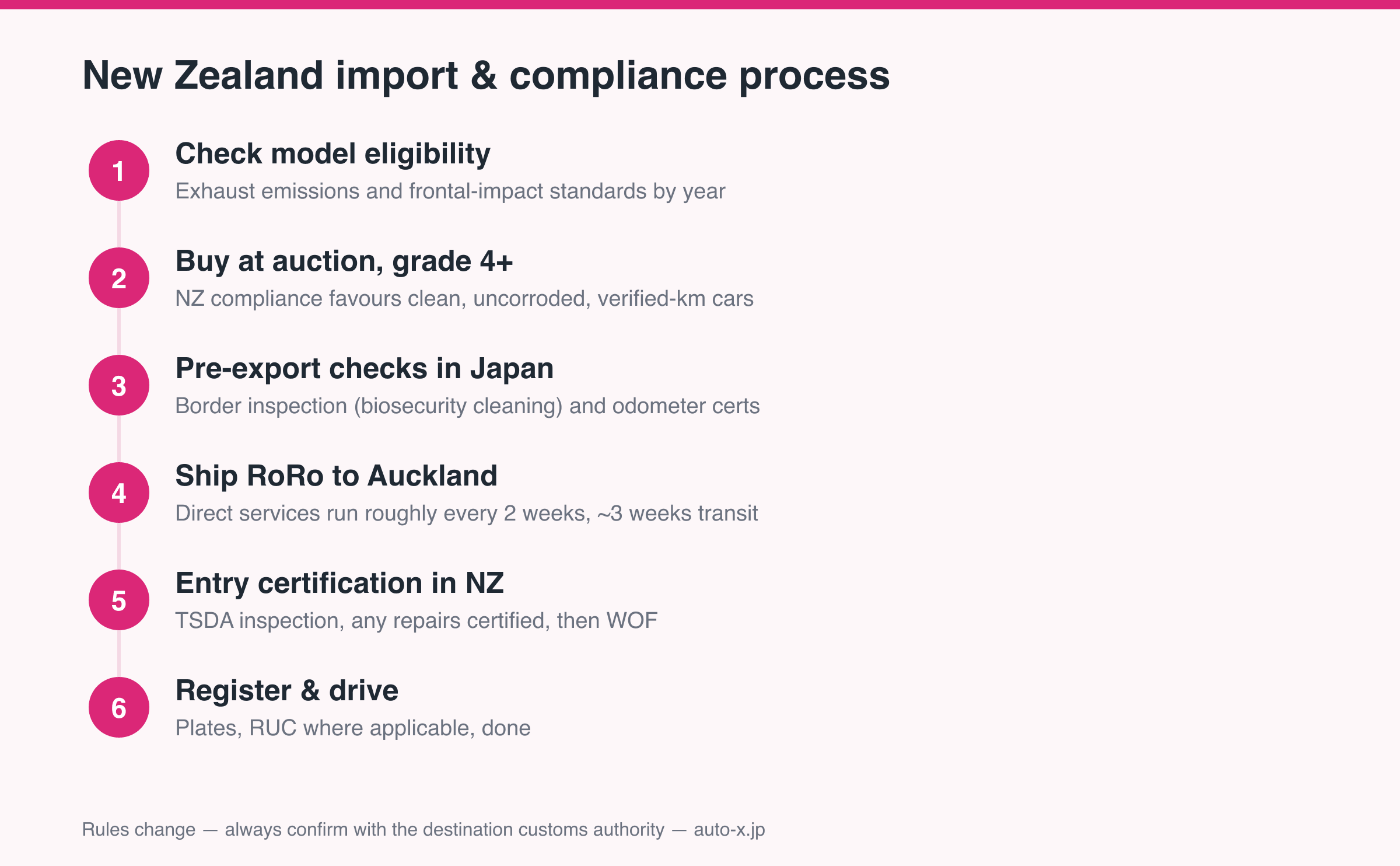
New Zealand does not accept every used car Japan can sell. Before we bid on anything for a Kiwi customer, we confirm the model and first-registration year against two sets of requirements: approved exhaust emissions standards and the frontal impact standard. In broad terms, the later the car, the easier the conversation — vehicles built to recent Japanese emissions standards generally sail through, while older cars can be caught out even if they look immaculate. Frontal impact compliance is usually demonstrated by the model itself being certified to an approved standard, which is one reason mainstream Japanese-market models are so much simpler to import than obscure grey-market ones. The exact cut-offs vary by fuel type, vehicle class and age, and they do change, so treat any year-based rule of thumb with caution and check the current requirements on the NZTA (Waka Kotahi) website — or ask your entry certifier — before money changes hands. We do this verification in writing for every New Zealand order.
Why We Quote Grade 4 and Above for New Zealand#
Every car sold at a Japanese auction carries an inspector's grade, and for New Zealand we almost always recommend grade 4 or better. It is not snobbery; it is arithmetic. A grade 4+ car typically has straight panels, an interior that needs nothing, and no structural repair history — which means fewer surprises at entry certification, where a New Zealand inspector will physically examine the vehicle's structure and flag corrosion or poor previous repairs. A cheap grade 3 car that needs remedial work after landing can erase its price advantage very quickly at New Zealand labour rates. If you want to understand exactly what those grades and the scribbled damage codes mean, see our guide on how to read an auction sheet. The short version: on the auction floor, the sheet is the car, and grade 4+ sheets are the ones we trust for compliance-heavy destinations like New Zealand.
Biosecurity: The Step That Catches First-Time Importers#
New Zealand's Ministry for Primary Industries (MPI) treats every arriving vehicle as a potential carrier of soil, seeds and insects, and its border officers genuinely inspect. A car that arrives with dirt in the wheel arches, leaves under the bonnet or organic debris in the carpets can be ordered into treatment or cleaning at the importer's expense, and in bad cases delayed for days. That is why we have vehicles professionally cleaned before shipping: underbody wash, engine bay, interior vacuum, spare-wheel well — the unglamorous corners inspectors actually look at. Seasonal measures (such as those targeting the brown marmorated stink bug) can add requirements at certain times of year, so we confirm what applies to the sailing date. Getting biosecurity right on the Japan side costs a little; failing it in Auckland costs more.
Odometer Culture: Why the Paper Trail Matters#
New Zealand buyers were among the first in the world to demand independent odometer verification on Japanese imports, and that culture is alive and well. Auction sheets record the reading at sale, export paperwork records it again, and the certification process on arrival expects the story to be consistent. It is one of the healthiest features of this market — and it rewards exporters who document properly. Every car we ship goes through a pre-export inspection with the odometer photographed and recorded, so our customers have an unbroken chain of evidence from the auction hall to the wharf.
The Crossing: RoRo to Auckland in About Three Weeks#
For most buyers, roll-on/roll-off shipping is the sensible choice for New Zealand. Direct services from Japanese ports to Auckland run frequently, and a typical voyage takes around three weeks port to port, though schedules vary by carrier and season. RoRo is cheaper than container shipping for a single vehicle, and the frequency means you rarely wait long for a sailing. Container shipping still makes sense for high-value cars or when consolidating several vehicles, and marine insurance is inexpensive relative to the value at risk — we recommend it on every shipment.
After the Wharf: Entry Certification, WOF and Rego#
Once the car clears customs and MPI, it goes to an entry certifier — a Transport Service Delivery Agent (TSDA) appointed under the NZTA system. This is the real gatekeeping step: the certifier checks the vehicle's identity, verifies compliance documentation, and inspects the structure before the car can be registered. Cars pass or fail here on the fundamentals — corrosion, previous repairs, missing documentation — which loops back to why we insist on grade 4+ stock and thorough paperwork. After entry certification comes the Warrant of Fitness (WOF) inspection, then registration and licensing, at which point the car is legally yours to drive. One more thing diesel buyers should budget for: New Zealand levies Road User Charges (RUC) on diesel vehicles, paid per distance travelled, instead of collecting tax through the price of diesel at the pump. It does not make diesels a bad buy — but compare running costs honestly, and check current RUC rates before choosing between petrol, diesel and hybrid.
What a Typical Import Actually Costs#
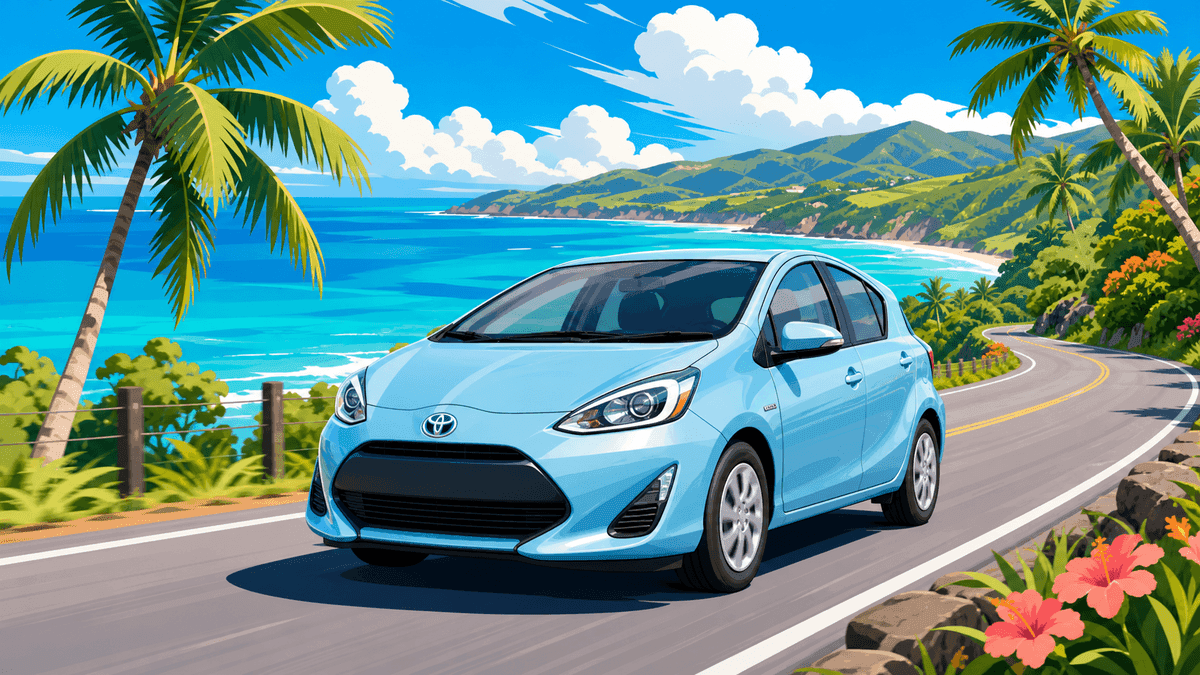
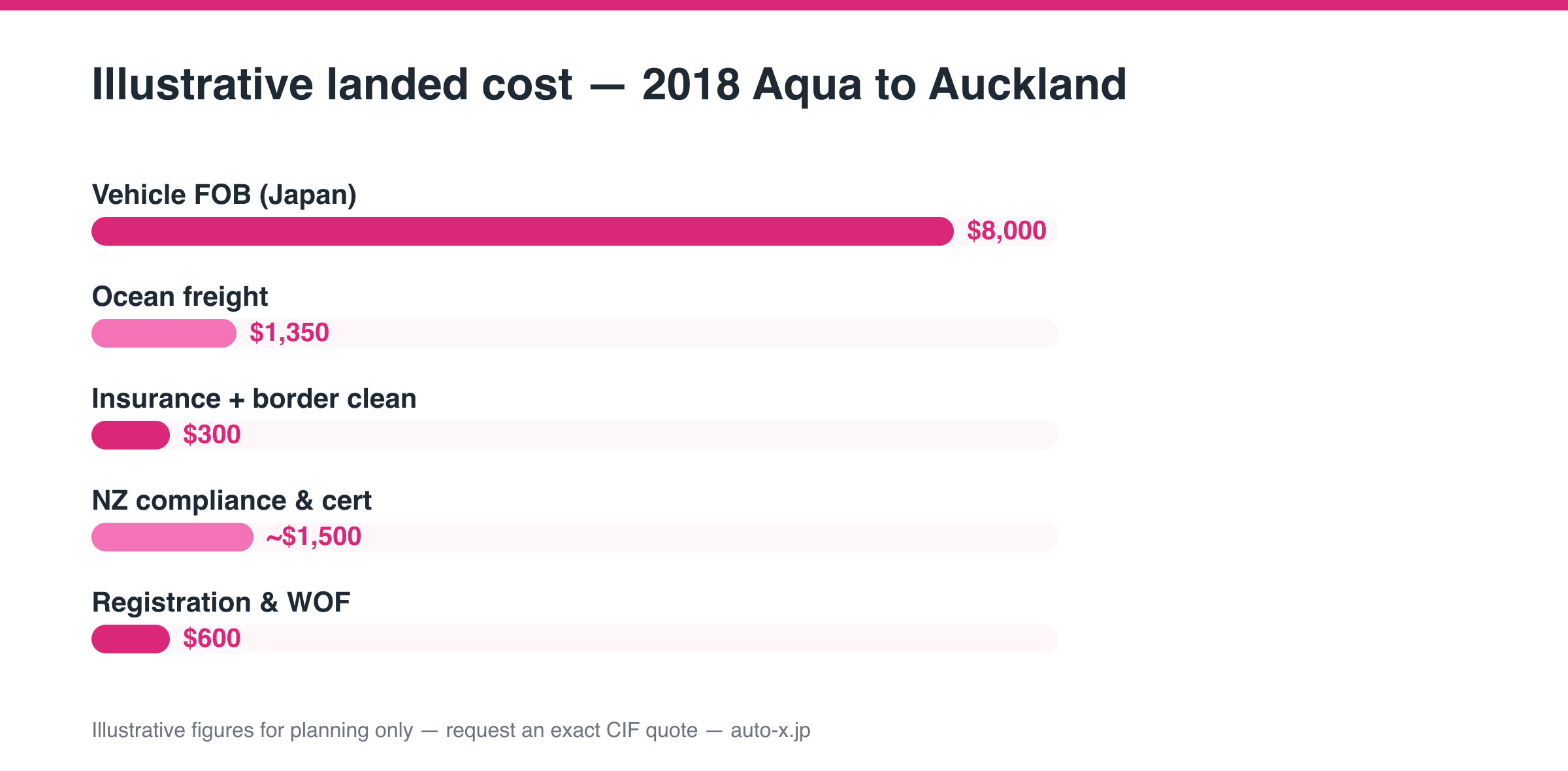
The numbers below are illustrative, based on one of the most popular requests from our New Zealand customers: a 2018 Toyota Aqua hybrid. FOB price around $8,000, RoRo freight to Auckland around $1,350, marine insurance plus border cleaning around $300, compliance (entry certification and any remedial work) roughly $1,500, and registration costs around $600. Actual figures move with auction prices, exchange rates and carrier surcharges, so treat this as a shape, not a quote. Hybrids like the Aqua dominate our New Zealand order book — if you are weighing one up, our hybrid buyer's guide covers battery checks and model-by-model notes.
FAQ#
Do I need an import licence to bring a car into New Zealand?
Private individuals can import vehicles, and there is no import licence of the kind some countries require. What matters is that the vehicle meets the applicable standards and passes entry certification. Rules differ for damaged or modified vehicles, so check the NZTA guidance for your specific case.
Can I import any Japanese car I like?
No — eligibility depends on emissions and frontal impact standards, which are tied to the model and its age. Recent mainstream Japanese-market models are usually straightforward; older or unusual vehicles need checking case by case. We verify eligibility before bidding on any car for a New Zealand customer.
How long does the whole process take?
As a rough guide: one to two weeks to source and buy at auction, a week or so for export preparation and cleaning, around three weeks on the water to Auckland, then customs, MPI, entry certification and WOF on arrival. Two to two and a half months from order to registration is a realistic expectation when nothing goes wrong.
New Zealand rewards importers who prepare: an eligible model, a grade 4+ auction sheet, a genuinely clean car and a consistent paper trail turn a strict process into a smooth one. That preparation is exactly what we sell. Tell us the model you want and request a free CIF quote — we will confirm eligibility, source the car at auction and manage everything up to the Auckland wharf.