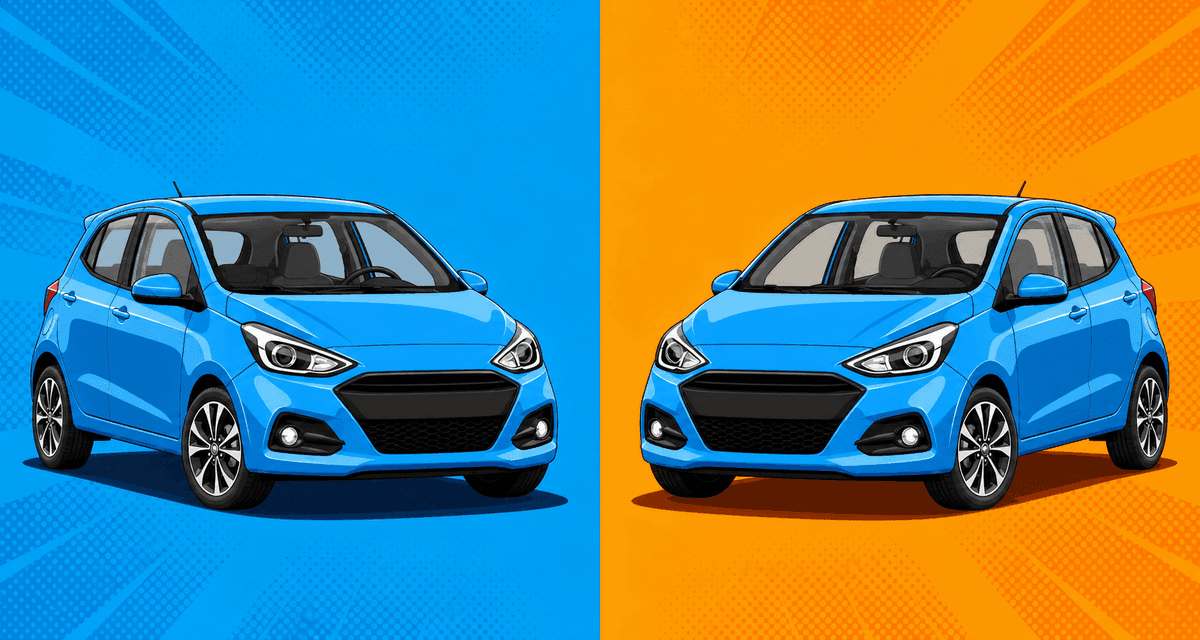
Understanding left-hand drive vs right-hand drive is the single most important decision you make before importing a used vehicle from Japan. Japan is a right-hand-drive (RHD) country, so almost every used car, van, and truck coming out of Japanese auctions has the steering wheel on the right. Whether that is an asset or a liability depends entirely on the destination market you sell into. Get it wrong, and your vehicle may be undriveable, unregisterable, or stuck in customs. Get it right, and Japan becomes the cheapest, highest-quality source of stock on earth.
This guide breaks down which markets welcome Japanese RHD stock, which demand LHD, which ban RHD outright, and how to choose the right route for your business.
Why Japan Is a Right-Hand-Drive Country#
Japan drives on the left side of the road, so the steering wheel sits on the right. Combined with a strict shaken inspection regime that pushes owners to replace vehicles early, this produces an enormous pool of low-mileage, well-maintained RHD cars flowing into export auctions every week.
For importers in RHD markets, this is a perfect match — you get near-new Japanese quality with no modification required. For LHD markets, the same stock needs conversion or careful sourcing, which changes the math entirely.
RHD Markets: Where Japanese Stock Fits Perfectly#
Right-hand-drive countries are AUTO-X's core territory. In these markets a Japanese RHD vehicle can be registered and driven exactly as it left the factory. Demand is strong precisely because Japan is a natural supplier.
Key RHD import markets include:
- Kenya, Tanzania, Uganda — East Africa runs on RHD; Japanese used cars dominate the roads here. Note Kenya's 8-year age rule.
- United Kingdom & Ireland — RHD, though EU/UK emissions and IVA/registration paperwork apply.
- Pakistan, Bangladesh, Sri Lanka — RHD; strong demand for kei cars, hybrids, and vans (age limits vary and change often).
- Australia & New Zealand — RHD; NZ is very import-friendly, Australia is stricter (SEVS / eligibility lists).
- Zambia, Zimbabwe, Malawi, Mozambique — RHD across southern Africa.
- Guyana, Jamaica, Trinidad & Tobago — RHD Caribbean markets fed largely by Japan.
If you serve any of these, Japanese RHD stock is your lowest-cost, highest-quality option — see our top 10 exported models for the fastest-moving vehicles.
LHD Markets and the Grey Zones#
Left-hand-drive countries drive on the right and put the wheel on the left. Japan does export some factory LHD units (mainly premium or export-spec models), but volume is limited, so LHD importers must source selectively.
A few important nuances:
- Russia — Officially LHD, but the Russian Far East (Vladivostok, Siberia) has a long-standing tolerance for imported Japanese RHD cars. This "grey zone" makes RHD viable east of the Urals while being impractical in the west. See our detailed guide on how to import to Russia.
- Chile — LHD country, but the Iquique free-trade zone historically processed large volumes of Japanese vehicles for re-export; direct road use requires LHD.
- Gulf states (UAE, Oman, Qatar) — LHD. Japan ships export-spec LHD units here, and there is a re-export trade, but a standard domestic RHD car is not road-legal.
- Mongolia, Kyrgyzstan — LHD on paper, with pockets of RHD tolerance similar to Russia's model.
For pure LHD markets, either buy factory-LHD Japanese stock or plan for a professional conversion.
Countries That Ban RHD or Require Conversion#
Some LHD countries prohibit RHD vehicles entirely, or allow them only after a certified conversion. This is a hard stop — importing RHD into these markets without conversion means the car cannot be registered.
- Most of continental Europe — RHD private imports are heavily restricted; road use typically requires LHD.
- Vietnam, Thailand caveat — Thailand is RHD (fine), but several neighbouring LHD states restrict RHD.
- China — RHD imports for road use are prohibited.
- Egypt, several Gulf-adjacent LHD states — RHD banned or requires conversion.
- Argentina, Brazil, Peru — LHD required; RHD not registrable for road use.
Conversion (moving the steering, pedals, dashboard, and wiring to the left) is expensive, technically demanding, and often voids the quality advantage of buying Japanese in the first place. Where a country bans RHD, it is almost always cheaper to source LHD stock directly.
RHD vs LHD Markets at a Glance#
| Country / Region | Drive Side | Japanese RHD Directly Usable? | Notes |
|---|---|---|---|
| Kenya | RHD | Yes | 8-year age limit, JEVIC inspection |
| Tanzania | RHD | Yes | Popular for vans & SUVs |
| UK / Ireland | RHD | Yes | IVA / registration paperwork |
| Pakistan | RHD | Yes | Age limits vary, kei & hybrids strong |
| New Zealand | RHD | Yes | Very import-friendly |
| Australia | RHD | Partly | SEVS eligibility list applies |
| Russia (Far East) | LHD (grey zone) | Yes (east) | RHD tolerated east of Urals |
| Chile | LHD | No (road use) | Iquique free zone for re-export |
| UAE / Gulf | LHD | No | Export-spec LHD or re-export only |
| Continental Europe | LHD | No | Conversion / heavy restriction |
| China | LHD | No | RHD road use prohibited |
| Chile / Brazil / Argentina | LHD | No | LHD required |
How to Choose the Right Route for Your Business#
Before you bid on any vehicle, work through this checklist:
- Confirm your destination's drive side and legal status — RHD-friendly, LHD-only, or RHD-banned. This determines everything else.
- Check the age/emissions rules — many RHD markets (Kenya, Pakistan, etc.) cap vehicle age; a perfect RHD car that is too old is still worthless at the border.
- Match stock to demand — hybrids and kei cars move fast in South Asia; SUVs and pickups dominate East Africa.
- Budget conversion only as a last resort — if your market bans RHD, sourcing factory LHD is almost always cheaper than converting.
- Plan the shipping lane — see the ports and lead times on our destinations we ship to page.
Closing#
Japan's strength is right-hand-drive stock, and the majority of the world's fastest-growing used-car markets are RHD — which is exactly why Japanese exports thrive. Nail down your destination's drive-side rules first, match age and vehicle type to local demand, and treat RHD-banned markets as LHD-sourcing problems rather than conversion projects. When you know your route, request a quote and we will help you source and ship the right vehicle.