Fiji drives on the left, Japan drives on the left, and Fiji's duty structure has long favoured exactly the kind of car Japanese auctions are full of: clean, low-mileage hybrids. Not many of our export destinations line up this neatly. From our Tokyo office we've settled into a familiar rhythm with Fiji-bound orders — win the car at auction, book RoRo space out of Yokohama or Nagoya, and three to four weeks later it rolls off the ramp at Suva or Lautoka.
This guide walks through the process the way we explain it to first-time buyers from Fiji: what the hybrid concessions mean in practice, the one rule you must check before bidding, how the shipment actually moves, what the landed cost looks like, and which models earn their keep on the islands.
Why hybrids get special treatment at Fiji customs#
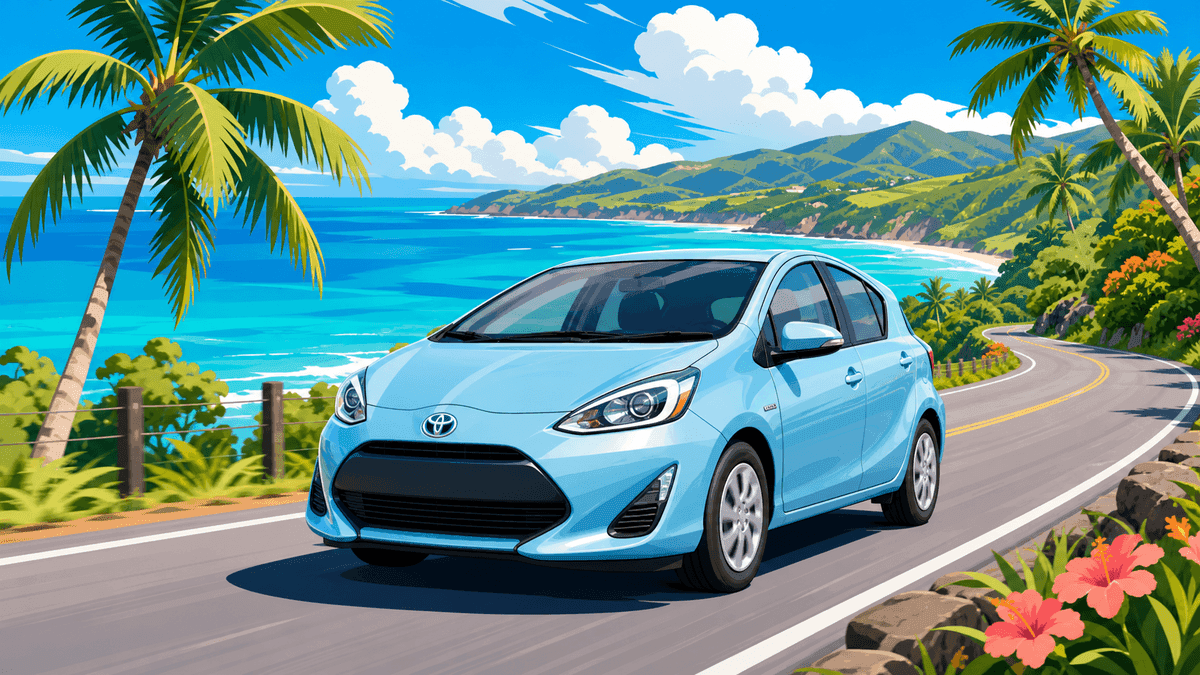
Fiji has used its import duty regime as an environmental-policy lever for years, and the practical effect for buyers is simple: hybrid vehicles attract concessional duty rates compared with equivalent petrol cars. That is a large part of why the Toyota Aqua and Honda Fit Hybrid have become the unofficial cars of Fiji — walk around Suva and you will see them everywhere.
Two caveats from our side of the transaction. First, the concession amounts and the fine print change with government budgets, so we never quote a duty figure as fixed — always confirm the current rates with the Fiji Revenue & Customs Service (FRCS) before you commit to a purchase. Second, the concession only helps if the hybrid itself is sound. Battery condition is the thing to verify on a used hybrid, and it is exactly what we check before bidding — our hybrid buyer's guide explains how we read auction sheets and battery diagnostics.
The age rule: check it before you bid, not after#
Fiji restricts the age of used vehicles that can be imported, and the limit has been adjusted more than once over the years. We deliberately don't print a number here, because a figure that was right when we wrote this could be wrong by the time you read it. Confirm the current age limit with Fiji Revenue & Customs before buying — it takes one enquiry and removes the single biggest risk in the whole process.
What we can tell you from experience: the limit is the first filter we apply when a Fijian customer sends us a wish list. A car that is even a few months over the cut-off cannot be registered, no matter how good the price was at auction. When you work with our auction agent service, we screen every candidate vehicle against the rule that is in force on the day, so nothing that can't land legally in Fiji ever gets a bid.
From the auction hall to the Suva wharf#
Here is the whole journey in five steps:
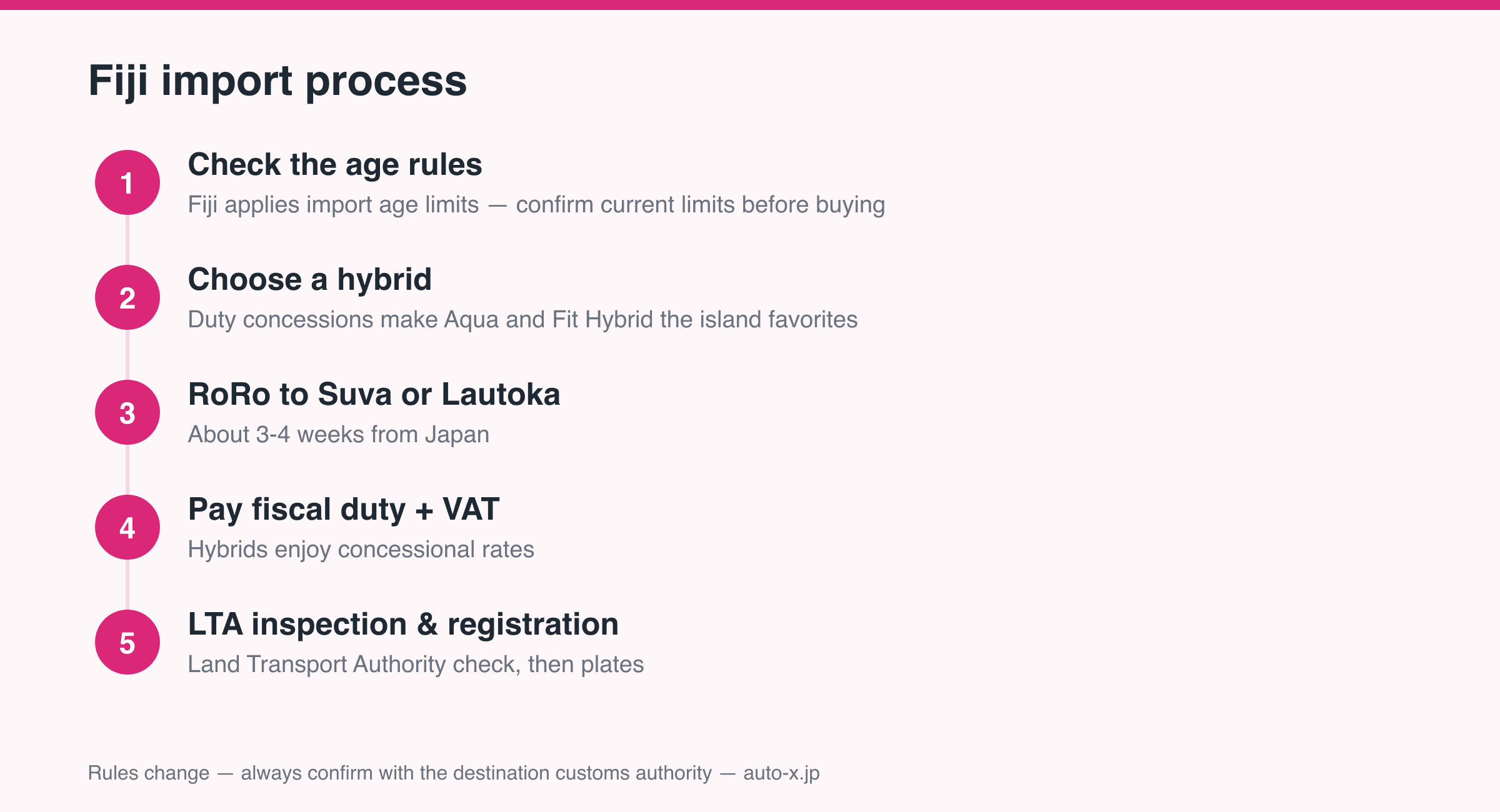
- Confirm the age rule. Check the current limit with Fiji Revenue & Customs, then set the auction search window accordingly.
- Choose your hybrid (or other model). We source from USS, TAA and other major auctions, grade the auction sheet, and verify hybrid battery health.
- RoRo to Suva or Lautoka. The car is driven onto a roll-on/roll-off vessel at a Japanese port. Transit is typically three to four weeks depending on the sailing schedule. Details on routes and frequencies are on our shipping to Suva page.
- Clear customs and pay duty + VAT. Your customs agent lodges the entry; hybrid concessions are applied at this stage.
- LTA inspection and registration. Pass the roadworthiness check, register, insure, and drive.
RoRo suits Fiji well: it is cheaper than container shipping for a single car, and both Suva and Lautoka handle RoRo vessels routinely. If you are in the west — Nadi, Lautoka, Denarau — discharging at Lautoka can save you the road trip from Suva.
What the landed cost actually looks like#
Numbers make the decision real, so here is an illustrative breakdown for a Toyota Aqua hybrid — treat every figure as an example, not a quote:
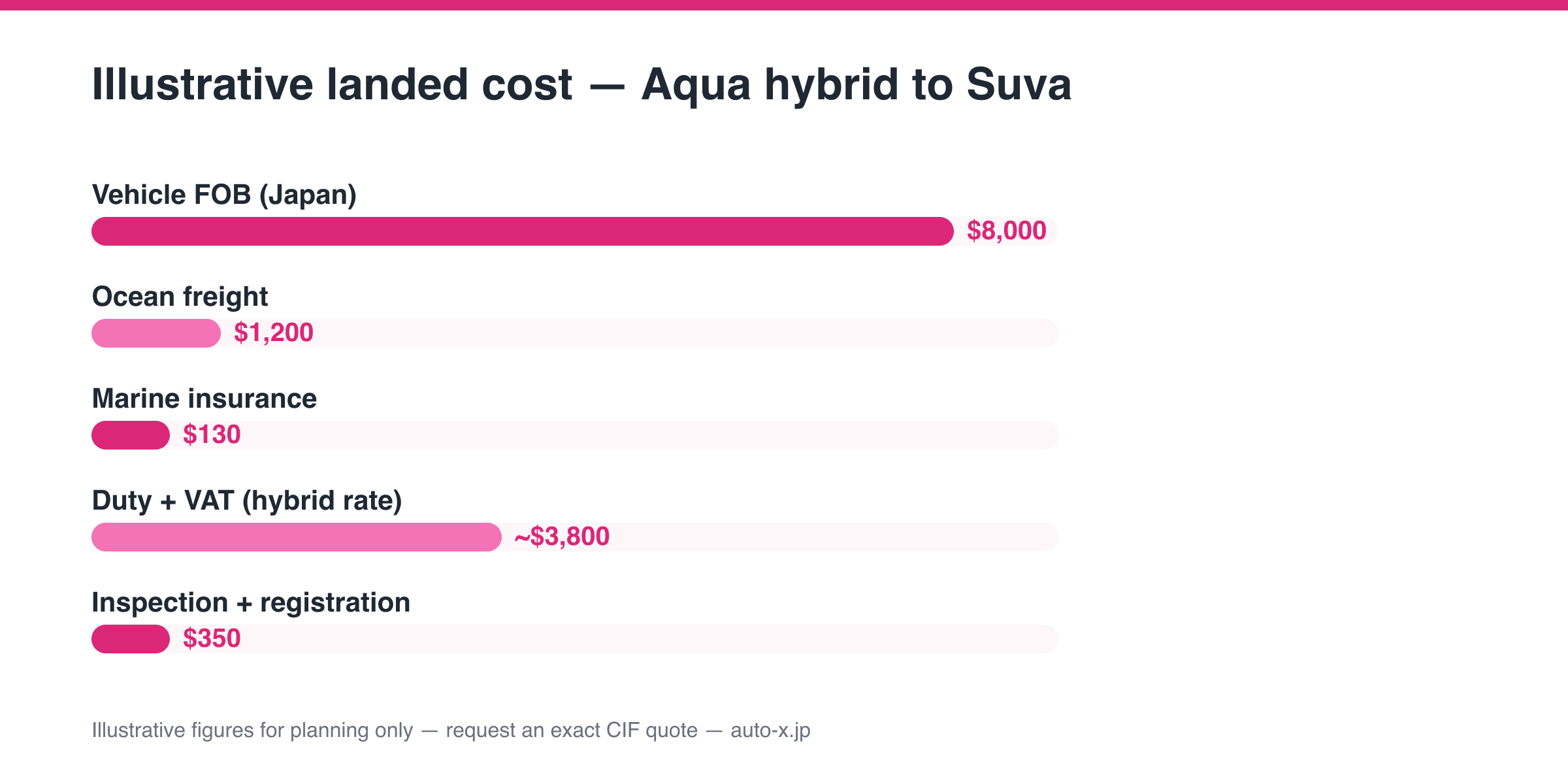
- FOB vehicle price: about $8,000 for a well-graded Aqua
- RoRo freight to Suva/Lautoka: about $1,200
- Marine insurance: about $130
- Duty + VAT: roughly $3,800 with hybrid concessions applied — this is the line that moves most, so verify with FRCS
- LTA inspection + registration: about $350
That's roughly $13,500 all-in for a car that will cost very little to run afterwards — which is the quiet second benefit of the hybrid concession: the savings continue at every fuel stop.
LTA inspection, registration, and getting on the road#
Before your import can wear Fijian plates, it goes through the Land Transport Authority. The LTA inspection is a roadworthiness check — brakes, lights, tyres, steering, structure. Cars from Japanese auctions generally pass without drama because the Japanese shaken system has already kept them to a high standard, but we still recommend budgeting a few days between wharf and registration for the paperwork to flow.
You will need the export certificate (deregistration document) from Japan with an English translation, the bill of lading, and your customs clearance documents. We supply the Japanese-side paperwork as a standard part of every shipment, so nothing gets held up waiting for a missing document.
One more thing that costs you nothing: Fiji drives on the left, so a right-hand-drive Japanese car needs no conversion, no compliance modification, nothing. It arrives ready for the road as built.
Matching the car to island life#
After enough Fiji shipments, patterns emerge:
- Daily drivers: the Toyota Aqua and Honda Fit Hybrid dominate for a reason — compact enough for Suva traffic and parking, frugal enough that island fuel prices stop hurting, and cheap to insure. The Prius works for buyers who want more cabin.
- Tourism and transfer operators: the Toyota Hiace is the workhorse of the Fijian tourism trade. Resorts, dive operators and airport-transfer businesses run them for decades; parts and mechanics who know them are everywhere.
- Rural and interior use: where roads get rough, a Hilux or a higher-riding SUV makes more sense than a low hybrid. Tell us where the car will live and we will bid accordingly.
FAQ#
How long does shipping from Japan to Fiji take?
Plan on three to four weeks on the water by RoRo, plus time before sailing (auction purchase, inland transport, export customs — typically one to two weeks) and customs clearance after arrival. Six weeks from winning bid to driving is a realistic overall timeline.
Is the hybrid duty concession guaranteed?
No — concessions are set by government policy and can change with any budget cycle. They have been a consistent feature of Fiji's import regime, but always confirm the current rates with Fiji Revenue & Customs before you buy. We check at the time of each order too.
Should my car arrive at Suva or Lautoka?
Both ports receive RoRo vessels. Choose the port nearer to you: Suva for the east and the capital region, Lautoka for Nadi and the west. Freight costs are similar; sailing frequency can differ, so we confirm the next available vessel for each port when you order.
Fiji is one of the smoothest destinations we ship to: left-hand traffic, hybrid-friendly customs, and ports that know RoRo cargo well. If you are ready to price a specific car — an Aqua, a Fit Hybrid, a Hiace, or anything else on the Japanese auctions this week — request a free CIF quote and we will come back with real numbers for Suva or Lautoka.