Singapore is the opposite of every other destination we write about. No 15-year-rule bargains, no cheap kei trucks, no rusty project cars. Singapore only accepts used cars that are under three years old, layers a Certificate of Entitlement (COE) on top, and adds some of the highest vehicle duties anywhere. And yet we ship there steadily — because for the parallel import trade in late-model Toyotas, the economics genuinely work. Here is how the market operates in 2026, from our side of the loading dock.
The 3-Year Rule: The Gate Everything Passes Through#
Singapore does not allow the import of used cars three years old or older. That single regulation shapes the entire trade. The cars we buy for Singapore clients are one to two years old at auction — often still under manufacturer warranty, frequently with four-digit odometer readings. Timing matters enormously: a car needs to clear auction, ship, and land with comfortable margin inside the window, so we never cut it close on a Singapore deal. When we advise on a purchase, we work backwards from the registration date on the export certificate, not the model year.
This rule is also why Singapore is the one market where "cheap" does not exist. The entry ticket is a near-new vehicle, and everything stacks from there.
COE and ARF: Why the Landed Numbers Look the Way They Do#
Two acronyms dominate any Singapore import conversation:
| Term | What it is |
|---|---|
| COE (Certificate of Entitlement) | The right to register and use a car, bought at auction from LTA. Quota-limited and expensive — often costing more than the car itself |
| ARF (Additional Registration Fee) | A registration tax calculated from the car's assessed open market value, on a tiered scale |
On top of those sit customs duty and GST. We deliberately do not quote current COE premiums or ARF percentages in an article — COE prices move with every bidding round, and the tiers get revised. Check the latest LTA figures or ask your Singapore-side agent for the current numbers before building your business case. What we can tell you from experience: the Japan-side cost of the car is often the smallest slice of the final on-road price in Singapore. That is normal there, not a red flag.
The practical consequence: mistakes are expensive. A car with an undisclosed repair history or the wrong spec doesn't just lose you the purchase price — it torpedoes a calculation where taxes multiply the error. This is exactly why Singapore dealers work with exporters they trust rather than the cheapest bidder.
What Parallel Importers Actually Order#
Singapore's parallel import scene is professional and specific. Our order book there is dominated by a short list:
| Vehicle | Why it works |
|---|---|
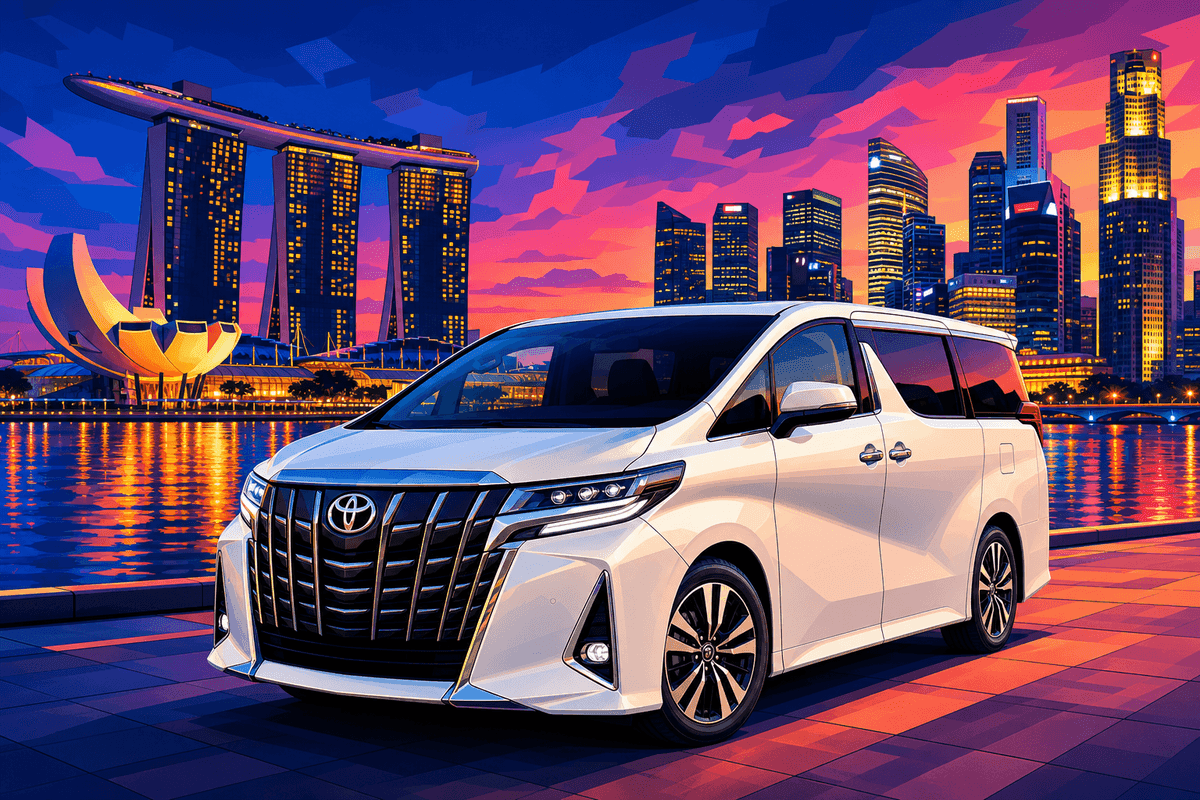
| Toyota Alphard / Vellfire | The default executive MPV; hotel fleets, family offices, limo operators. Late-model hybrids especially |
| Toyota Harrier | Premium crossover at a sharper price than the equivalent authorised-dealer import |
| Toyota GR models (GR Yaris, GR Corolla, GR86) | Enthusiast demand outstrips official allocation; near-new auction cars fill the gap |
| Land Cruiser and premium hybrids | Where the maths clears, buyers pay for spec Japan gets first |
The common thread: cars where Japanese domestic spec is equal or better, supply in Singapore is constrained, and a one-year-old auction car undercuts the authorised channel. Browse our current stock — the late-model section is effectively our Singapore shelf.
Grades, Records and Why Auction Sheets Matter More Here#
Because every Singapore car is near-new, condition differences are subtle — and the auction sheet is where they show. We only propose high-grade cars for Singapore (typically grade 4.5 and up, with clean interior scores), and we send the full auction sheet, service records where available, and our own inspection photos before you bid. A one-year-old car with panel repair history might be fine for other markets at the right price; for Singapore's tax structure, it rarely makes sense. We will tell you when it doesn't.
Shipping to Singapore#
The good news: this is one of the shortest, most frequent routes we serve. Sailings from Japanese ports to Singapore are plentiful, and transit is quick compared with our Atlantic routes — we confirm the exact schedule at booking. Most Singapore-bound cars go in containers, which suits the near-new stock and how dealers there consolidate. Landed-cost examples and route details are on our Singapore destination page.
One timing note that matters here more than anywhere: because of the 3-year rule, we book shipping before or immediately after the auction win, not weeks later. The buffer belongs to you, not to a slow freight forwarder.
Payment#
Same policy as every market we serve: bank transfer to our corporate account in Japan, nothing else. No crypto, no personal accounts, no third-party "agents" collecting on our behalf. For deals at Singapore price levels this discipline matters even more — details on our payment page.
FAQ#
Can I import a JDM classic — say an R34 — into Singapore?#
Not under the used-car rules; the under-3-years requirement excludes them. Singapore has separate niche schemes for vintage vehicles with heavy usage restrictions, but that is a different process entirely — verify current LTA rules if that is your goal.
Do I need to be a dealer to import?#
Most of our Singapore volume goes to parallel importers and dealers, but individuals do import with an agent handling the LTA process. Either way, the Japan side — sourcing, inspection, shipping — works the same, and that is the part we run.
How do I know the car will arrive inside the 3-year window?#
We check the first-registration date on the export certificate before you bid and only propose cars with comfortable margin. The window is calculated on hard dates, so this is arithmetic, not guesswork.
If you are pricing a specific model for the Singapore market, send the details through our quote page. We will come back with an FOB price, freight to Singapore, the auction sheet standard we would insist on for that model — and a straight answer if we think the numbers don't clear.