Bangladesh is one of the largest South Asian markets for used Japanese vehicles, with the Port of Chittagong handling tens of thousands of right-hand-drive imports each year. Bangladeshi buyers favor a specific mix: small hybrid sedans (Toyota Aqua, Axio Hybrid), compact passenger cars (Honda Fit, Toyota Vitz), kei cars where allowed, and Toyota Hiace / Noah for ride-share and family transport. But Bangladesh's import duty structure is among the most punishing in the region — getting the model and engine choice wrong can double or triple your landed cost. This guide covers the import process, the duty cascade reality that drives pricing dynamics, the BSTI / Bangladesh Bank requirements, and what actually clears the math for Bangladeshi buyers.
Why Bangladeshi buyers turn to Japan#
Right-hand drive matches Bangladesh#
Bangladesh drives on the left, like Japan. Right-hand-drive imports work directly without conversion.
Hybrid + sub-1500cc tax preference#
Bangladesh's import duty structure heavily favors small-engine and hybrid vehicles. A 1500cc hybrid Toyota Aqua faces dramatically lower combined duties than a 2000cc gasoline sedan. This is the central pricing logic — Bangladesh's market disproportionately consumes Aqua, Axio Hybrid, Vitz, Fit, and similar small-engine models because the alternatives are taxed prohibitively.
Brand prestige#
Toyota dominates the Bangladeshi market with significant prestige. Honda, Mitsubishi, and Suzuki all have presence but Toyota commands premium resale values across all classes.
Bangladesh-specific import policy#
Age limit#
Bangladesh has historically capped used vehicle imports at:
- 5 years for most passenger cars (sedan, hatchback, SUV)
- 7 years for some commercial categories
- Specific category exceptions exist; verify current rules with your Bangladesh-side clearing agent
The age limit is calculated from the registration year, not the manufacture year — this distinction matters at the borderline.
Bangladesh Bank approval#
For imports above certain thresholds, Bangladesh Bank Letter of Credit (L/C) approval is required. Most commercial imports route through L/C from a Bangladeshi bank to a Japanese acceptance bank.
BSTI inspection#
The Bangladesh Standards and Testing Institution (BSTI) verifies vehicle compliance for imported vehicles. Some inspection categories happen at Chittagong port, others at the buyer's location.
BRTA registration#
Bangladesh Road Transport Authority handles vehicle registration. Documentation requirements include the customs cleared certificate, BSTI compliance, insurance, and applicable taxes.
The import process#
Step 1: Confirm L/C requirements#
If your import value exceeds Bangladesh Bank thresholds (varies by year), L/C is the standard payment route. T/T may be possible for smaller imports — verify with your Bangladeshi bank.
Step 2: Quote and sourcing#
A Japanese exporter responds within 24 hours with itemized CIF Chittagong. Itemized: FOB, ocean freight to Chittagong, marine insurance, pre-export inspection, exporter service fee.
Step 3: Auction sourcing#
Most Bangladeshi buyers want low-mileage 2020+ vehicles in the popular Aqua / Axio / Fit categories. Stock from major exporters' yards is common.
Step 4: Pre-export inspection (recommended)#
While Bangladesh doesn't strictly require JEVIC, the inspection report serves as a contractual lever and helps with BSTI compliance documentation.
Step 5: Payment via L/C or T/T#
L/C is processed through your Bangladeshi bank; T/T directly. Confirmed L/C from a top-tier Bangladeshi bank to a Japanese acceptance bank takes 1–2 weeks to set up but provides settlement security.
Step 6: Vessel booking#
Yokohama → Chittagong: typically 25–35 days RoRo.
Step 7: Chittagong clearance#
A licensed Bangladeshi clearing agent ("C&F agent") handles port operations. Coordinates:
- Customs duty assessment by NBR (National Board of Revenue)
- Supplementary duty
- VAT
- Advance Income Tax
- Regulatory duty
- BSTI compliance verification
- Final customs clearance
Total clearance time at Chittagong: 2–4 weeks under normal conditions.
Step 8: BRTA registration#
After clearance, BRTA registration with the Dhaka, Chittagong, or relevant district office. Insurance is mandatory.
The duty cascade reality#
Bangladeshi vehicle duties cascade — each duty is calculated on the running total including previous duties. For a 2022 Toyota Aqua (1.5L hybrid) at USD 9,500 FOB:
| Line item | USD |
|---|---|
| Vehicle FOB | 9,500 |
| Ocean freight (RoRo Yokohama → Chittagong) | 850 |
| Marine insurance (1.5%) | 150 |
| Pre-export inspection | 200 |
| Service fee | 400 |
| CIF Chittagong | 11,100 |
Bangladeshi duties (highly variable, indicative for small hybrid):
- Customs duty: variable
- Supplementary duty: variable (engine cc-based)
- VAT: 15% on running total
- AIT (Advance Income Tax): 5%
- Regulatory duty: variable
- Other charges
For a 1500cc hybrid Aqua, total Bangladeshi-side duties typically add USD 8,000–13,000. Final landed cost: approximately USD 19,000–24,000.
For a 2000cc gasoline sedan at the same FOB, duties typically add USD 18,000–25,000. The same vehicle in non-hybrid 2000cc form lands at almost double the cost — which is why Bangladesh imports skew so heavily to small hybrids.
Top imported models in Bangladesh#
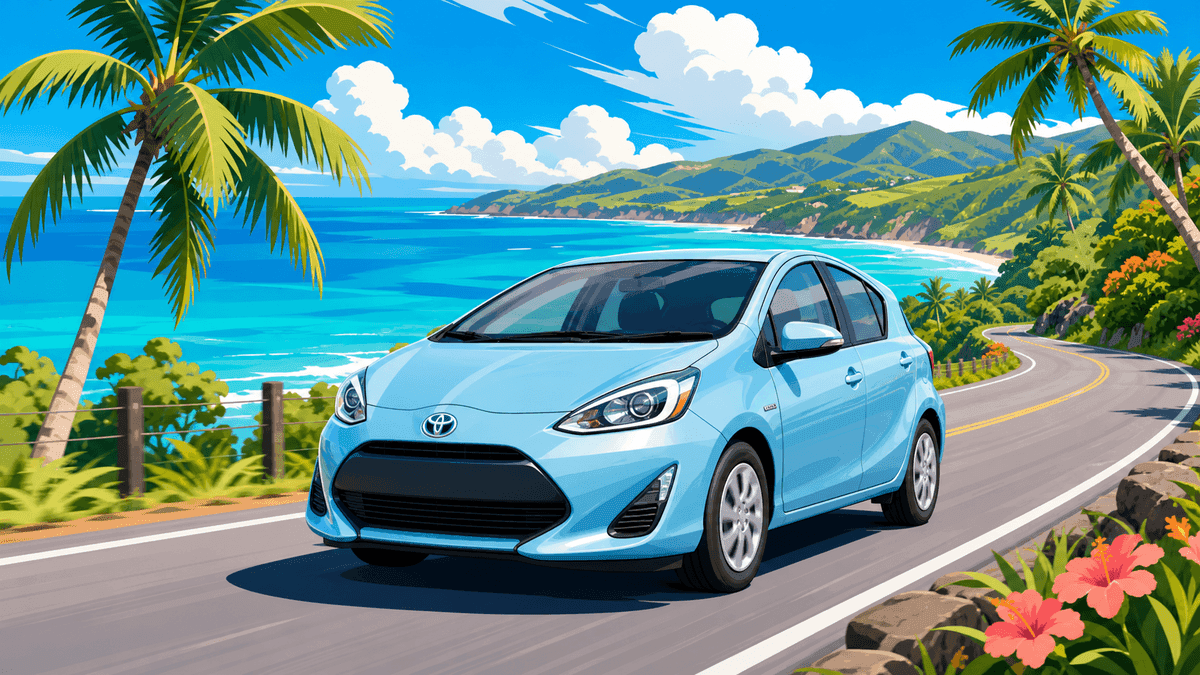
- Toyota Aqua / Prius C — the volume champion, sub-1500cc hybrid
- Toyota Axio Hybrid (Corolla Axio Hybrid) — sedan hybrid, family choice
- Toyota Vitz / Yaris — sub-1300cc gasoline budget option
- Honda Fit Hybrid (GP5/GP6) — alternative to Aqua
- Toyota Premio / Allion 1.5G — premium family sedan
- Toyota Noah / Voxy — family minivan
- Toyota Probox — commercial wagon
- Mitsubishi ek Wagon / Suzuki Wagon R — kei cars where allowed
- Toyota Hiace — for ride-share / shuttle
- Toyota Land Cruiser Prado — premium SUV
The clear pattern: hybrid + sub-1500cc dominates, with everything else being a niche.
Hybrid battery considerations#
Bangladesh's climate is hot and humid year-round. Hybrid batteries degrade faster in hot climates. Always request a battery health check (USD 100 add-on at JEVIC if equipped) for any hybrid import. A degraded battery costs USD 1,500–3,500 to replace and wipes out the fuel-economy savings.
Common Bangladesh-import scams#
- L/C documentation fraud — verify L/C process directly with your bank
- Inflated duty estimates by clearing agents — get multiple quotes
- Forged BSTI certificates — verify with BSTI directly
- Currency conversion gaming — settling in Taka at unfavorable rates
Bottom line#
Bangladesh rewards careful spec choice. Sub-1500cc hybrids land at far lower cost than larger gasoline equivalents. Use L/C for larger imports, work with a licensed Chittagong C&F agent, and verify hybrid battery health before paying the balance. The math heavily favors specific model categories — fight the temptation to import what you'd personally want and import what the duty structure favors.
Next steps#
Request a quote to Chittagong for a specific vehicle. For background, see How importing works, Pre-export inspection, Hybrid cars guide, and the first-time importer's checklist.